



Everything you need to win in an era of AI Overviews, stricter Google enforcement, and customers who make decisions before clicking a single result.
Local SEO Is Now Three Search Engines at Once
Since 2005, when Google rolled out Maps and dropped the 7-Pack into search results, local SEO was a game with one scoreboard. You optimized for Google, you showed up in the map pack, the phone rang, and you took that all the way to the bank.
That's still partly true. But 21 years later, Google has evolved and become three search engines wearing the same trench coat. There's the traditional blue-link search you grew up with. There's the map pack, which has become a living organism of its own. And there's the AI Overview: a confident paragraph at the top of the page that answers the question so comprehensively your potential customer never scrolls down to meet you.
Meanwhile, about 45% of consumers now use ChatGPT or another generative AI tool for local business recommendations, which means even Google isn't the whole of what you should be optimizing for anymore.
This is the part where most SEO influencers will tell you something reassuring like "don't panic, the fundamentals still apply." And they do. But the fundamentals are doing more work now than they used to, and a few of them (citations/links, entity clarity, third-party mentions) have quietly tripled in importance while most small businesses weren't looking.
The thesis of this guide is simple: local SEO in 2026 is less about being optimized and more about being visible. Visible to Google. Visible to AI. And visible to the humans those two are trying to help. That visibility gets built in three layers, which is how we'll move through this piece:
- Your foundation. The digital footprint that tells search engines you exist and know what you do.
- Your structure. The website that earns the traffic once it arrives.
- Your community presence. The off-site signals that prove you're a real business humans actually interact with.
We'll close with how to measure any of this, because none of the above matters if you can't tell whether it's working and driving revenue to your business.
Just so we're not wasting your time: this guide is written for local service businesses. Dentists, law firms, home services, restaurants, medical practices, rehab facilities, independent retailers, and the like. If you're running a pure e-commerce operation or an enterprise with 4,000 locations, some of this applies, but the strategies will differ. You've been warned.
Part One: The Foundation
Before we talk about next gen local SEO, you have to be dialed in on the basics. Search engines, including the LLMs like Claude and ChatGPT, can't rank what they can't identify. So, your job at this stage is to make your business easy as visible as possible.
Google Business Profile: Not a Listing, a Homepage
The single biggest mindset shift for 2026: your Google Business Profile is no longer a listing you set up once and leave alone. It is the homepage most of your customers will see before they ever visit your website.
Let that land for a second. A customer searching "family dentist Durham" or even your brand name will see your GBP panel, your reviews, your photos, your services, and your hours, all before a single blue link loads. If what they see looks alive, they might click through. If it looks abandoned, they're already calling the dentist next to yours.
According to Whitespark's 2026 Local Search Ranking Factors report, GBP signals account for roughly 32% of local pack ranking weight. That's the single largest controllable factor you have. And Google's own data shows customers are 2.7 times more likely to consider a business reputable when it has a complete Business Profile.
A well-maintained GBP in 2026 looks like this:
- Primary category matches your core service exactly. Not "contractor" when you mean "plumber." Not "medical clinic" when you mean "dermatologist." Choosing the wrong primary category is one of the most common reasons good businesses rank poorly. Add secondary categories only for services you actually offer.\
- Business name matches your real-world signage. If you stuff your name with keywords ("Joe's Plumbing | Best Emergency 24/7 Plumber in Durham NC"), Google will suspend you, and competitors can report you to speed that along. Google has gotten noticeably less patient with this in 2026.\
- Every field is filled out. Hours, services, service areas, attributes, products. Complete profiles receive roughly 70% more visits than incomplete ones. An empty "Services" section is the digital equivalent of a bakery that won't tell you what they sell.\
- New photos, weekly. Real photos of your space, your team, your work. Not stock images of vaguely professional-looking strangers shaking hands. Google's vision AI now reads these images as content, and profiles with steady photo uploads meaningfully outperform ones that went dormant.\
- Posts, regularly. Two to three times a week if you can, weekly at a minimum. There's debate among serious SEOs (and Sterling Sky's research is worth reading here) about whether posts directly move rankings. Probably not in a measurable way. But they do move engagement, and engagement signals absolutely move rankings. Treat posts like a social feed, not a press release archive.\
- Q&A seeded and monitored. Add your most common customer questions and answer them yourself. If you don't, random internet strangers will, and they are not your marketing team.\
- Reviews responded to. All of them. This deserves its own section, and it'll get one.
One important update for 2026: Google has essentially merged the old Q&A section with an AI-powered "Ask Maps" feature that generates answers by scanning your profile, reviews, and website. The implication is both absurd and important: the better the source material you give Google, the more accurate the AI's answers about your business will be. If your GBP is thin, Gemini will fill in the blanks with whatever it finds, and some of what it finds will be a three-star review from 2019 about a parking situation you've since fixed.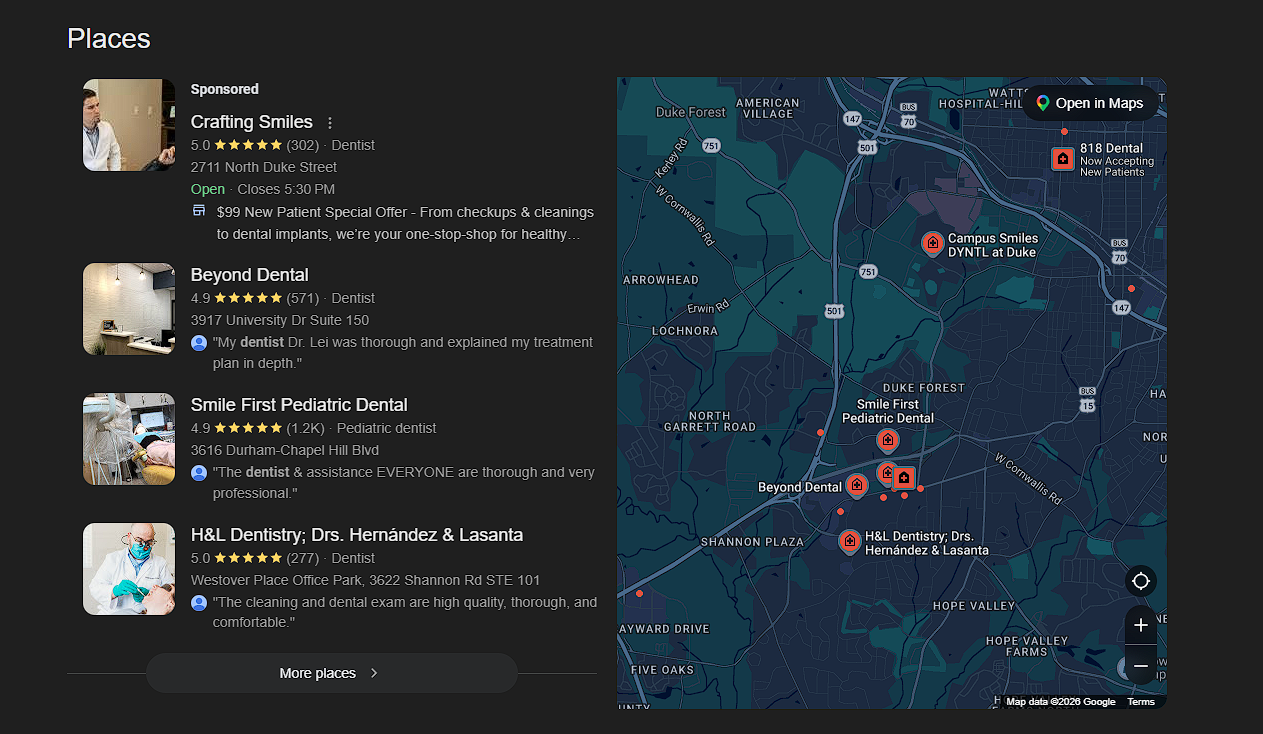
Your Website: Google's Fact-Checker
Your GBP is the front of house. Your website is the kitchen. In 2026, Google uses the website to verify everything the profile claims.
If your GBP says you offer cosmetic dentistry but your website is a single page about general family dentistry from 2017, Google will not confidently rank you for "cosmetic dentist." The two need to corroborate each other. Ideally, the "Services" tab on your GBP mirrors the services pages on your site, with matching language and similar descriptions.
Simply put: You need both a website and a Google Business Profile, and they need to be consistent in how they talk about your business and its offerings.
Citations and NAP: The Boring Part That Matters More Than You Think
In case you need a refresher, in local SEO speak, citation is just an online mention of your business's Name, Address, and Phone number (NAP). Yelp, Apple Business Connect, Bing Places, the Better Business Bureau, and industry directories all count.
Two things to understand about citations in 2026.
First, consistency matters more than volume. Ten perfect citations beat two hundred sloppy ones. AI tools in particular cross-reference your NAP data across multiple trusted sources to build what the industry calls "entity confidence," or their certainty that your business is real and specifically the business they think it is. One platform listing your phone with a different area code, or your address as "123 Main St." versus "123 Main Street," and the AI starts hedging. A hedging AI recommends your competitor.
Second, AI has made the top citations more important, not less. According to Advice Local's read on the 2026 ranking factors data, citations rank third among AI search visibility factors at roughly 13%, and three of the top five AI visibility signals are citation-related. If you want to show up when someone asks ChatGPT for "a good real estate attorney in Durham," your citation hygiene matters.
Practical implementation: use a tool like BrightLocal, Moz Local, or Whitespark to push consistent NAP data to the major aggregators and core directories in a few clicks. Yext works if you have the budget, but it's famously a "rent, don't own" model. Stop paying and your listings can unwind. For most local service businesses, a one-time BrightLocal audit plus quarterly cleanup is more than enough.
And know which directories actually matter. The five that meaningfully move the needle in AI-era local search are:
- Google Business Profile
- Apple Business Connect (especially now that iOS users increasingly search via Siri and bypass Google entirely)
- Bing Places
- Yelp
After that, you want industry-specific directories. Avvo and Justia for lawyers. Healthgrades and Zocdoc for medical practices. Houzz and Angi for home services. Leafly and WeedMaps for cannabis dispensaries. These matter because AI models have been trained on them disproportionately, but that's not an exhaustive list by any means.
Even though your competitors might be doing the most, you do not need to be on 200 directories. You need to be accurate on the top 20.
Part Two: Your Website, the Closing Argument
The best local SEO work in the world will send traffic to a website that can't convert. And, unfortunately, most service business websites cannot convert. They were built by the owner's nephew in 2019 and have been slowly accumulating irrelevant photos ever since.
Here's the thing: traffic is not the product. Booked calls are the product. Your website exists to turn visitors into them.
Architecture First
Before you write a single word of content, get the information architecture right. A local service business site in 2026 should have, at minimum, the following things to ensure you're getting shots on goal for core search terms:
- A homepage that clearly explains what you do, who you do it for, and why you're worth calling.\
- Individual services pages. One per core service. Not one combined page titled "Our Services" that lists everything in bullet form. If you do five things, you have five pages, each one comprehensively describing that service, who it's for, what it costs (or how pricing works), and what to expect.\
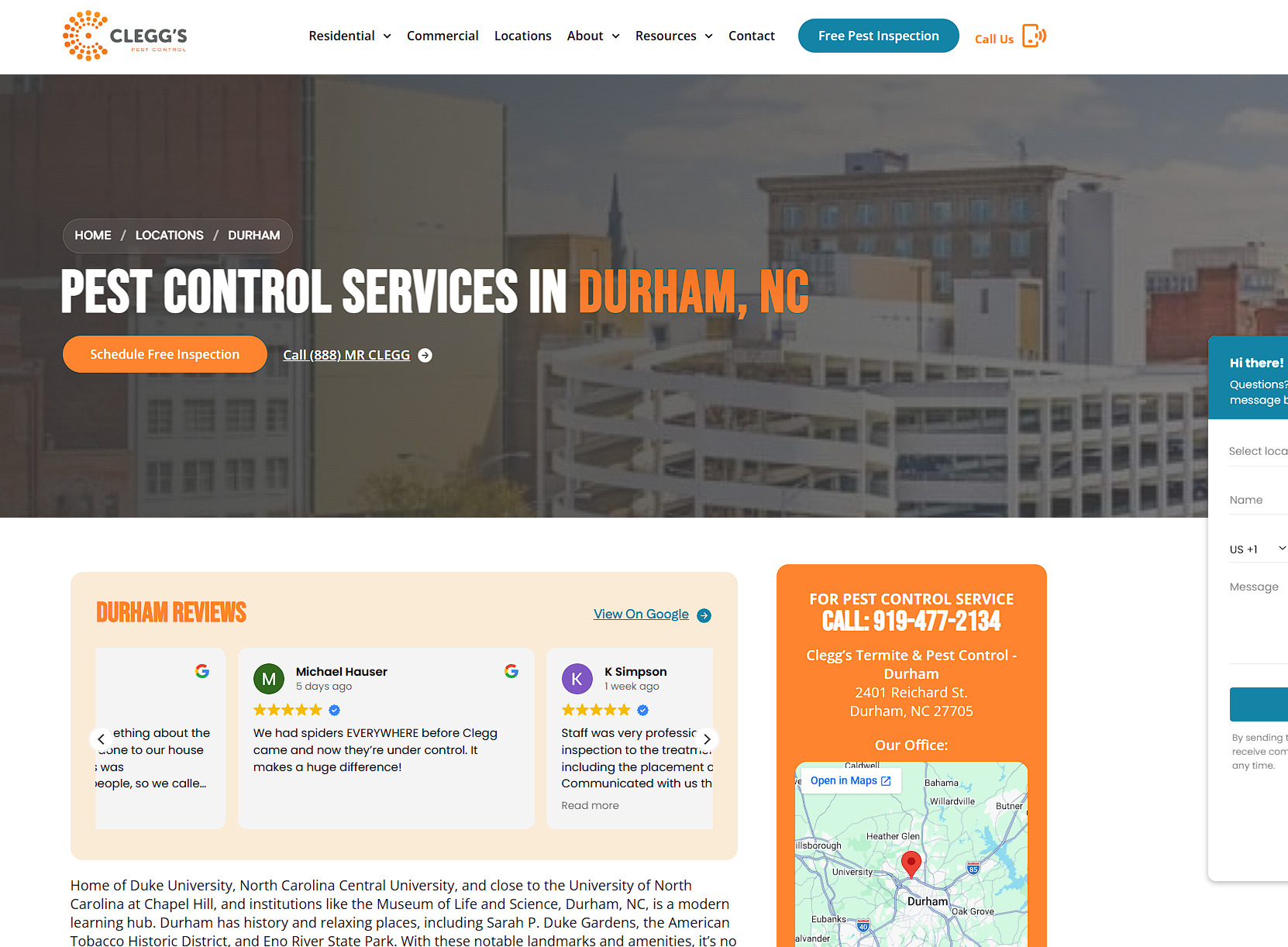
- Location pages if you serve multiple cities or neighborhoods. An HVAC contractor serving Durham, Chapel Hill, and Raleigh needs three location pages, each with localized content and testimonials from that area. Emulent's 2026 analysis is blunt on this: individual city pages outperform generic "service area" listings, often dramatically.\
- Industry pages if you serve distinct verticals (a marketing agency's industry pages, a commercial contractor's vertical pages, and so on).\
- An About page with real faces. Not stock photos. Not LinkedIn headshots from 2014. Current photos of actual team members, with names, roles, and credentials. Google's E-E-A-T framework (Experience, Expertise, Authoritativeness, Trustworthiness) leans increasingly on first-person expertise signals, and nothing destroys trust faster than a team page of strangers.\
- Case studies or proof. Before-and-afters. Client results. Testimonials that do more than repeat "Great service!" five times in different fonts.\
- A blog or resource library that actually helps people. Your customers have questions. If your website doesn't answer them, some competitor's will, and the customer will be sitting in their office when the trust is built.\
- A contact page that doesn't hate the user. One form. Two or three fields. A real phone number. A way to book a call without three layers of CAPTCHA. Qualify, but don't stifle their ability to get in touch with you.\
MAKE SURE THESE ARE ALL LINKED INTERALLY! Internal linking between these pages is how Google understands your site's topical structure. Your services pages link to relevant industry and location pages. Your blog posts link to relevant services. Every path eventually leads to your contact page, because that is how traffic becomes revenue.
Write for Intent, Not Keywords
Here is the update nobody who sells SEO wants to admit out loud: keyword stuffing is a dead craft. It's been dying slowly for a decade, and in 2026 it's mostly in the ground. What's alive, and what's ranking, is intent.
Intent-driven content sounds fancy. It isn't. It means writing content that actually answers the question a real customer is asking, in the language they'd actually use, addressing the specific problem they're trying to solve.
The easiest way to get at this: look at your customer service logs. Every question a prospect has ever asked you is a piece of content waiting to be written. Every objection is a page. Every misunderstanding is a headline.
A divorce attorney whose clients keep asking "will I lose my house?" should have a page titled something close to that. Not "Durham Family Law Services" with three paragraphs of pedantic throat-clearing about "navigating the complexities of marital dissolution." The former gets found, read, and trusted. The latter gets skimmed past on the way to a competitor who understood the assignment.
This approach has a secondary benefit you didn't pay for: it maps exceptionally well to AI search. AI Overviews and large language models like ChatGPT retrieve content that directly answers questions, organized in a way that's easy for them to parse. Write "How long does a divorce take in North Carolina?" as an H2, answer it clearly in the first fifty words, and you've just written something Google's AI and ChatGPT will both consider citing. Generative Engine Optimization, or GEO, is mostly this: clear questions, clear answers, structured content, and an identity that's unmistakable across the internet.
Schema Markup: The Bit Most People Skip
Schema markup is structured data you add to your website to tell search engines exactly what each page is about. It's invisible to humans and absolutely legible to machines. In 2026, with AI systems pulling information at scale, schema has shifted from "nice to have" to genuinely important.
For a local service business, the schema types that matter are:
- LocalBusiness (or a more specific subtype like Dentist, Attorney, Restaurant) on your homepage and contact page\
- Service schema on each service page\
- FAQPage schema on pages with question-and-answer sections\
- Review and AggregateRating if you display reviews on your site\
- BreadcrumbList for navigational clarity\
- Organization for your overall brand entity
Google's official LocalBusiness schema documentation walks through the required fields. The full schema vocabulary is maintained at schema.org/LocalBusiness. For those who'd rather not handwrite JSON-LD at 11pm, most WordPress SEO plugins (Rank Math, Yoast, and The SEO Framework) generate this automatically with some configuration. Before you publish anything, run it through Google's Rich Results Test to catch errors.
A specific note for AI search: FAQPage schema is punching well above its weight right now. It helps Google's AI Overviews and external LLMs understand that your page contains direct question-answer pairs, which makes you significantly more likely to be cited. If you have a blog post covering a common customer question, FAQ-marking it up is among the highest-leverage things you can do in an hour.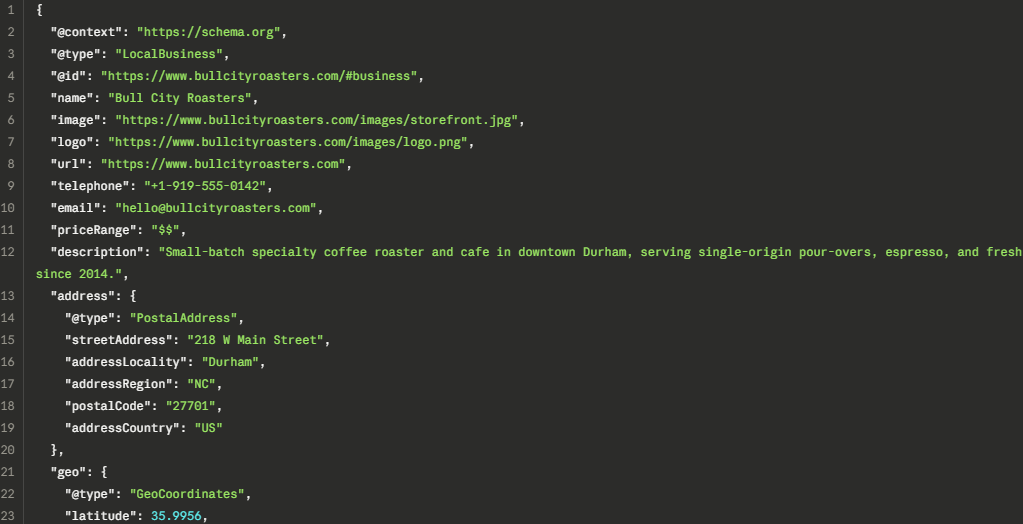
E-E-A-T for Local: Faces, Credentials, Specificity
Google's quality guidelines lean hard on experience and expertise. For local businesses, that translates to a few practical things:
- Owner and team bios with real credentials (license numbers, years in practice, certifications, awards)
- Blog posts with author bylines tied to real people on your About page
- Photos of actual work, not stock
- Specificity about your methodology, tools, and process
- Genuine case studies with specifics: client names where allowed, measurable outcomes, dates
The overall question Google is trying to answer, across every ranking signal, is: "Is this a real business run by real people who actually do this work?" E-E-A-T is the set of proxies for that answer. The more signals you give, the more confidently Google can choose you.
Part Three: The New Reality, Winning in AI Search
I've been gesturing at AI search throughout this guide because it now threads through every other layer. But it deserves its own section, because if you read only one part of this guide and you read this one, you're ahead of most of your competitors.
It's also worth noting that NOBODY has the exact sauce for crushing AI search in 2026. This is all trial and error in a space that's constantly evolving every 20 minutes as a new hot AI model rolls out. Don't believe someone if they tell you they are an AI or GEO (Generative Engine Optimization) mastermind.
The Landscape
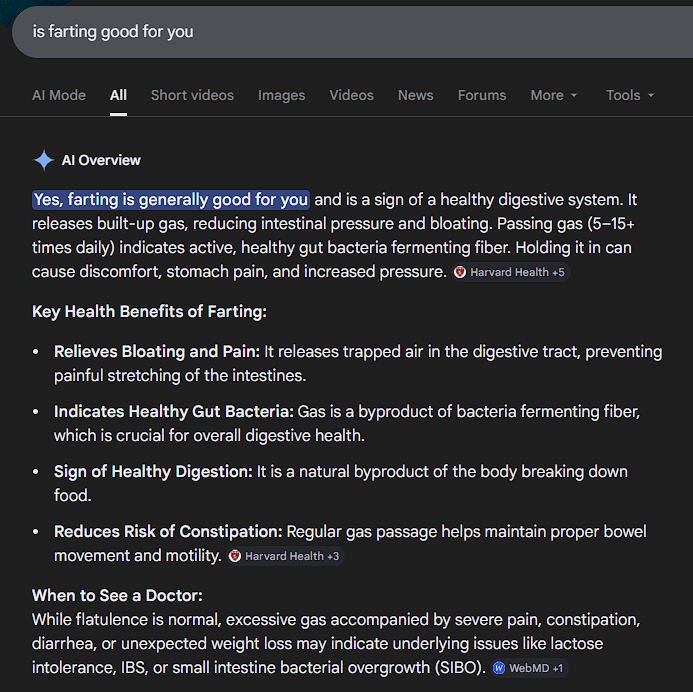
A few numbers to set the stage. About 45% of consumers now use ChatGPT or another generative AI tool for local business recommendations. Around 21% of ChatGPT users switch to Google to verify what they find, meaning AI and Google are now a two-step journey, not an either/or. And Ahrefs found in early 2026 that only about 38% of AI Overview citations come from pages ranking in Google's top 10 for that query, down from 76% in 2024. Being cited by AI is increasingly its own discipline, not a free byproduct of traditional SEO.
Here's the one that should keep you up at night: according to SOCi's 2026 Local Visibility Index, visibility in ChatGPT's local recommendations is about 30 times harder to achieve than ranking in Google's local pack. Less than half of businesses that lead in Google local search also appear in AI recommendations.
Translation: the businesses winning in AI are not the ones who won in 2022. There's room for you.
What AI Actually Looks At
AI models don't crawl the web the way Google does. They're trained on snapshots plus real-time retrieval from specific high-trust sources. When someone asks ChatGPT about local businesses, the model typically cross-references:
- Google Business Profile data\
- Major citation sources (Yelp, Apple Maps, BBB, industry directories)\
- Third-party "best of" content and listicles\
- Your own website, if it's clearly structured\
- YouTube (yes, really. YouTube has become the single most-cited domain in Google's AI Overviews, growing its citation share by 34% in six months)
The signals that correlate with getting cited are the ones we've been discussing. Clean NAP data across authoritative platforms. A complete GBP. Schema markup. Content that directly answers questions. And, increasingly, appearances in third-party content that positions you as a top option in your market.
Best-of Lists and the New Importance of PR
One of the most interesting findings from the 2026 Whitespark survey is that appearing in expert-curated "Best Of" or "Top Local" lists is now among the highest-weight factors for local AI search visibility. When someone asks an AI for the best pediatric dentist in Raleigh, the AI is synthesizing what a handful of trusted third-party sources have said about pediatric dentists in Raleigh. If you're not in those sources, you're not in the answer.
This means your 2026 local marketing budget should probably include some modest amount of PR-adjacent work:
- Pitching yourself for inclusion in local "best of" roundups (city magazines, local blogs, industry-specific lists)\
- Getting mentioned by local journalists\
- Earning inclusion in Reddit threads about your service category (not by spamming, but by being good enough that people bring you up organically)\
- Getting quoted in industry publications\
- Being referenced on podcasts and YouTube videos in your niche
None of this PR work is new and it's not cheap. However, it's been shown to pay dividends.
Part Four: Off-Page Work, Reviews, Community, and the Flywheel
If the foundation and the website are the prerequisites, the off-page strategy is where most of your actual ranking is determined. This is where good businesses become dominant businesses, and it's where most DIY operators run out of gas.
Reviews: Velocity, Volume, Response
Reviews are among the most heavily weighted controllable signals in 2026. Whitespark's research places review signals at 16-20% of local ranking weight, and that share is rising year over year. For healthcare and dental businesses, reviews can dominate at up to 33% of ranking weight.
Three things matter, in roughly this order.
Velocity. Steady new reviews over time beat a huge pile of reviews from 2022. The math in 2026 has shifted noticeably toward favoring recency. A business with 80 reviews and a steady weekly flow now typically outranks a business with 200 reviews and nothing in the past six months. If your last review came in when "WAP" was still on the radio, you have a problem.
Volume. You still need a real base. The top three positions in local packs average around 561 Google reviews with a 4.8-star rating in competitive industries. You don't need 561 to rank. You just need to be in the neighborhood of the other businesses ranking for your terms. Look at your top three competitors in the map pack, note their review counts, and plan accordingly.
Response rate. Businesses that respond to 80%+ of reviews see measurable ranking boosts. More importantly, prospects read your responses more carefully than the reviews themselves. A thoughtful, specific response to a negative review can turn an objection into a conversion. A defensive or copy-pasted one turns a lukewarm reader into a click onto a competitor's site.
A few practical guidelines for responses:
- Respond to every negative review within 24 hours. Calmly. Specifically. Never defensively.\
- Respond to positive reviews too, briefly and in real language. Not "Thanks for your feedback!" Write something like "So glad the install went smoothly, Brenda. Enjoy the new HVAC, and let us know if anything comes up."\
- Mention the service provided when possible. Subtle keyword inclusion in responses helps AI understand what you do.\
- Never, ever write fake reviews. Google's detection has gotten unreasonably good, and the penalties range from review removal to full GBP suspension. If your friends and family have already been leaving reviews since 2018, Google knows.
The easiest review-building systems are the boring ones: a follow-up text or email to every customer after service, with a direct link to your Google review form. BrightLocal's tool has a good one, GatherUp is solid, and most CRMs can automate this in about twenty minutes of setup. The businesses that win at reviews are not the ones with the cleverest tactics. They're the ones who simply ask, consistently, forever.
Community Citations: The BBB, Chambers, and Professional Orgs
If you were Google for a minute, and you were trying to decide whether a law firm in Durham is legitimate and relevant, you'd want to see that firm show up in the places where legitimate and relevant law firms show up. That means:
- The Better Business Bureau\
- Your local Chamber of Commerce\
- Industry-specific professional associations (state bar associations, dental societies, local contractor groups)\
- Local business networking organizations (BNI, EO, Vistage chapters)\
- Your neighborhood merchant association or main street program
These citations do three things at once. They build backlinks from trusted local domains. They create local entity associations that help Google understand you as a Durham business, not just a business in general. And they reinforce your NAP across high-trust sources in a way that absolutely affects AI systems' confidence in recommending you.
None of this is glamorous. It's mostly thirty minutes of work, a small annual fee, and a profile page you fill out once. But it's a low-cost, high-leverage set of moves that a shocking number of businesses skip.
Nonprofit Sponsorships: The Community Flywheel
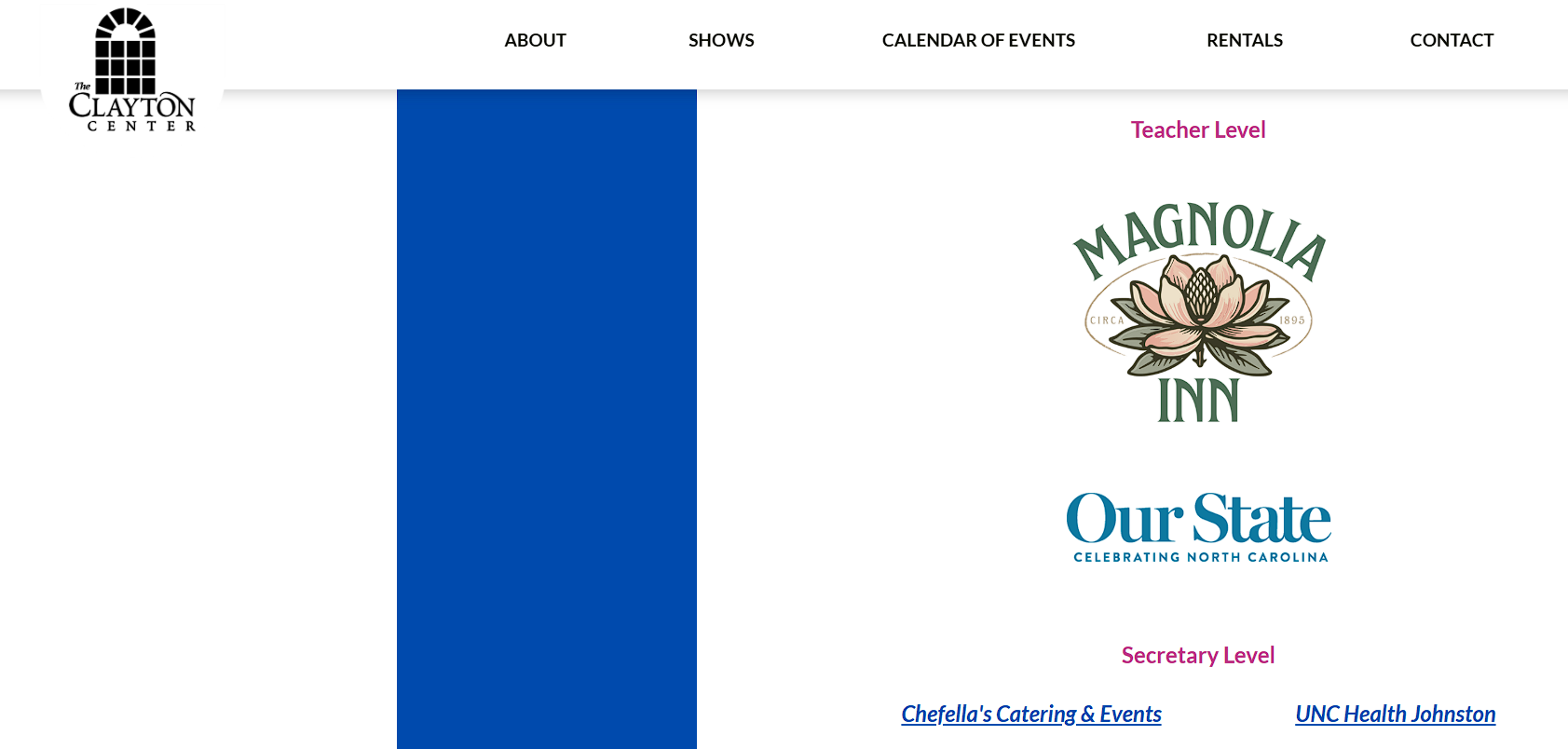
Here's the strategy most of your competitors won't even consider, and the one I find works best in competitive markets: sponsor local nonprofit organizations whose missions tangentially align with your business.
The alignment piece is critical. This isn't random charity (though all charity is good charity). It's strategic charity, the kind Google reads as meaningful.
If you're a divorce attorney, sponsor a women's shelter, a local organization supporting domestic violence survivors, or a homelessness outreach program. The relevance is contextual: your clients are often navigating exactly the kinds of transitions those nonprofits exist to support, and Google's understanding of your business as an entity is strengthened by associations that make topical sense.
If you run a pediatric dental practice, sponsor youth sports leagues, a children's hospital fundraiser, or a school reading program.
If you're a contractor, sponsor Habitat for Humanity chapters, local trade school scholarships, or a neighborhood beautification program.
Simply put, show up where your ideal customers are focused.
The benefits stack:
- You get backlinks from high-authority local nonprofit sites\
- You get listed on their sponsor pages (possibly with consistent NAP, if you play your cards right)\
- You get press coverage from event announcements and fundraiser writeups\
- You get actual community goodwill, which shows up in word of mouth and organic reviews\
- Your business gets associated with your service category's tangential concerns, which strengthens topical entity signals\
- In AI search, you start appearing in lists that position you as a community-involved option in your market\
I've seen this single tactic move the needle harder than a full content strategy for firms in competitive practice areas. It works because it's real. A law firm that actually sponsors a domestic violence survivor nonprofit is a different kind of entity than a law firm that just buys ads, both to Google and to humans.
The usual budget for this, for a small business, is between $1,000 and $10,000 per year, depending on your market. That money will almost always outperform the same amount spent on Google Ads for ranking effects in the long run, though it will not produce next-week leads. This is a six-to-twelve month play. Plan accordingly.
I used to work with an agency called Zipsprout that is the absolute best with this kind of link building. If DIY is too much to manage, give them a holler.
Part Five: Measurement, or How to Know If Any of This Is Working
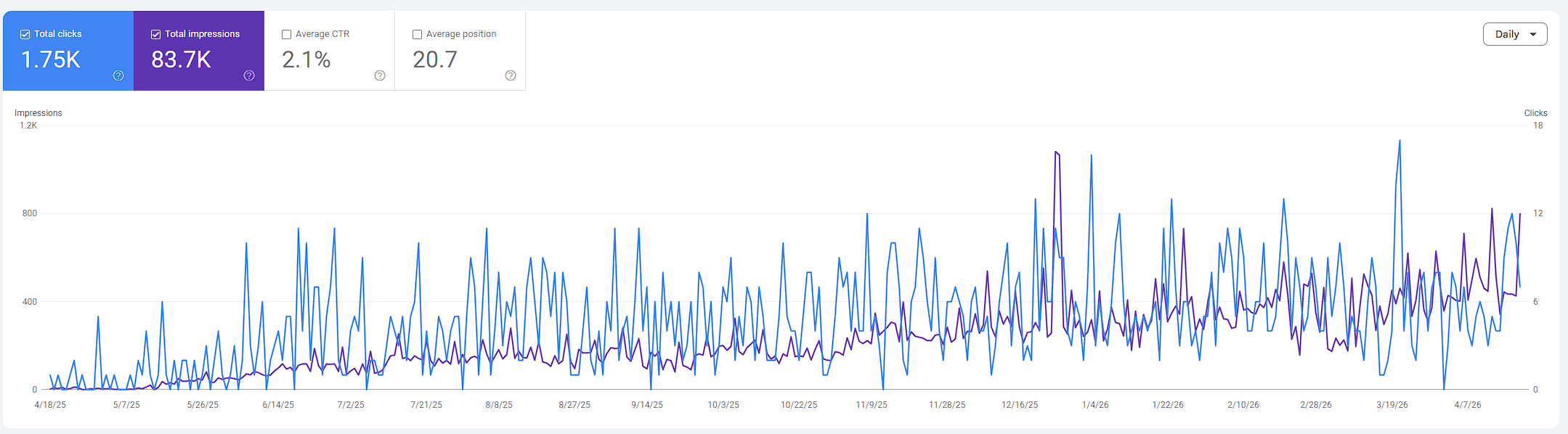
You can do every single thing in this guide correctly and still have no idea whether it's working unless you measure it. Here's the minimum-viable scoreboard.
- Google Search Console. Set this up yesterday if you haven't. It shows which keywords are driving impressions and clicks to your website, and it's the cleanest signal of whether your content strategy is landing.\
- Google Analytics 4. GA4 is an acquired taste, but it's the only way to see how your organic traffic behaves once it arrives. Focus on conversion events (form submissions, phone clicks) over vanity metrics.\
- Google Business Profile Insights. Built into your GBP dashboard. Shows you calls, direction requests, website clicks, and photo views. These are the metrics that correlate most directly with actual business revenue.\
- Local rank tracking. Ranking in the map pack varies by the searcher's location, so tracking "am I in the top three?" from your office chair tells you almost nothing. Tools like Local Falcon or BrightLocal's local search grid show you how you rank across a geographic area, which is the only version of that question worth answering.\
- Call tracking. If phone calls are how your business converts, you need dynamic number insertion and call tracking. CallRail is the standard. Without it, you can't tell which channel is driving phone calls, and without that, you can't spend your marketing budget intelligently.
Once a month, look at all of these together. Impressions in GSC are growing? Good. Map pack rank is improving? Good. Phone calls from GBP are ticking up? Excellent. Content you published is now getting cited in AI Overviews? You're winning.
Sick of digging around in multiple platforms for that data? Build a great Data Studio report that aggregates all of it into a one-sheeter that you can check at a glance.
If all the dials or new leads are flat after six months of genuine effort, something is wrong upstream. It's usually either the website (poor conversion) or the market (you've picked terms that are uncompetitive for reasons related to demand, not rank).
Closing: You're Not Optimizing, You're Becoming Visible
A last-minute pep talk.
Local SEO in 2026 isn't actually more complicated than it used to be. It's more honest. The shortcuts that worked in 2018 (keyword-stuffed business names, citation carpet-bombing, paying teenagers overseas for exact-match anchor text backlinks) have been patched out. What's left is the real work: a clear business identity, a website that answers real questions, consistent activity on the places your customers look, and a reputation built one review and one community sponsorship at a time.
This is good news, ultimately. It means the businesses that win are the businesses that deserve to. The playing field is leveler than it's been in years.
If you've read this far, you have more than enough of a framework to start executing. The order I'd recommend for a local service business starting from scratch, or from a weak position:
- Fix your Google Business Profile (week one)\
- Audit your citations and clean up the top twenty (weeks two to three)\
- Rebuild your website's architecture: homepage, services pages, location pages, contact (weeks three to six)\
- Implement schema markup and fix on-page SEO (week six)\
- Set up a review request system and start asking (week seven)\
- Identify two or three nonprofits to sponsor and one or two local professional orgs to join (week eight and ongoing)\
- Start publishing genuinely useful content against real customer questions (weeks eight onward, forever)\
- Measure monthly, adjust quarterly
That's a six-to-nine month plan if you do it yourself. It'll feel slow in month two and obvious in month six.
If you'd rather not do any of this yourself, that's what we do at Elliott Digital. We specialize in local SEO for service businesses who'd rather run their business than read forty-seven local SEO articles. Book a call and we'll put together a plan that actually fits your market.
Either way, whether DIY or delegated, the time to start is now. In twelve months, your competitors are going to look back and wish they had.
This guide will be updated as local search continues to evolve. Spot something that's gone stale, or have a question that isn't covered here? Email lee@elliott.digital.